
Can Zohran Mamdani Beat the New York Post?
The media dynamics working in his favor

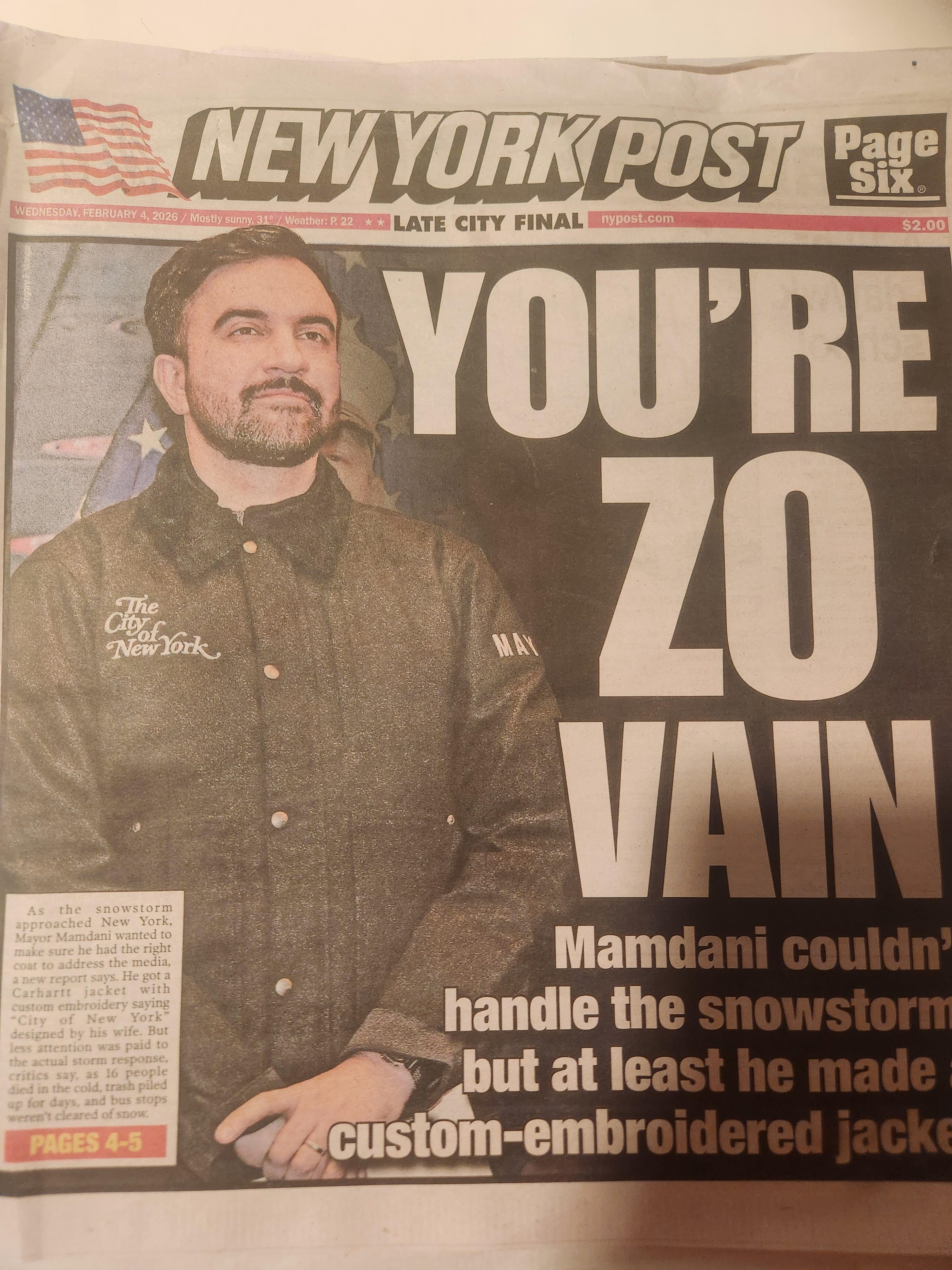
Both Zohran Mamdani and the New York Post are on a bit of a run. The former is the 34-year-old mayor of New York City and one of the most famous politicians on Earth. The latter is a tabloid newspaper that, amid endless turmoil in the industry, boasts one of the most popular news websites on the internet and makes enough cash for its owner, Rupert Murdoch, that a sister publication is now launching in California. The Post—not to be confused with the Washington Post, which is being gutted by its rapacious and bumbling owner, Jeff Bezos—is undeniably a success, and occupies an unusual and large position in the New York City media ecosystem. Its rival, the Daily News, has a much smaller headcount because its hedge fund ownership is refusing to invest in the newspaper, and the Murdoch-owned Wall Street Journal ripped up its New York section years ago. The New York Times is a juggernaut, but is still far more focused on national and international coverage. I have hope for the revamped City Hall bureau, which the star local reporter Sally Goldenberg recently joined; if their city coverage will improve, the Times is still not shifting back to the granular daily coverage of the five boroughs it was known for decades ago. There is no standalone Metro in print. There are hardly any city columnists left.
The Post, in this environment, can throw its weight around. Many New Yorkers need to read it to know, to some extent, what is happening in their city every day. The Post regular writes about the public schools, local politics, and various outer borough drama that the Times ignores. Its politics are a frothing, populist conservatism on local matters, and neoconservative when it comes to foreign affairs. The tabloid is furiously hawkish on Israel and hasn’t yet found a war it doesn’t like. Reflecting Murdoch’s own anguished relationship with Donald Trump, it has tried, at various points in the last decade, to break with the Republican king—Ron DeSantis was once DeFuture—only to return when it became clear the Republican base wasn’t done with Trump. The Post, politically, has always been canny. Its editors know Trump reads the newspaper regularly and they’ll never fall out of favor for too long. In the end, the Post is MAGA until better options come along.
Naturally, the Post despises New York liberals of all kinds. Their editors whack around the Democratic governor, Kathy Hochul. After boosting Andrew Cuomo early in his gubernatorial reign, they turned on him in the late 2010s and giddily led the charge when it became clear he was masking Covid deaths in nursing homes. They cheered when he resigned from office following his sexual harassment scandal. They were decidedly not thrilled when he decided to run for mayor again, and circled the wagons around Eric Adams, the only mayor in the last decade that had the editorial board’s buy-in for multiple years. For a period, the Post begged the police commissioner, Jessica Tisch, to run for mayor. Finally, when it became obvious the only way to stop Mamdani was to elect Cuomo, the right-wing tabloid begrudgingly backed the former governor.
What was far less begrudging—naturally—was their war on Mamdani. A Muslim democratic socialist was a foil engineered for the Post in a lab somewhere. The Post relishes publishing alarming, red-baiting reporting on the Democratic Socialists of America, and once it became obvious Mamdani was gaining momentum, he made their front page repeatedly. As the Democratic nominee, as the mayor-elect, and as the new mayor, Mamdani has been subject to relentlessly negative coverage from the Post. For the Post, “Zo” is the rich boy Islamic communist who will destroy the city. He now, in their view, has blood on his hands because seventeen New Yorkers froze to death during a horrific cold snap that covered much of the Eastern United States. Minor scandals, to them, are major scandals. A distraught Cea Weaver naturally had the front page to herself in early January.
This kind of coverage, twelve years ago, did tangible damage to Bill de Blasio, the new progressive Democratic mayor. De Blasio rode into office on a raft of goodwill, taking over from the billionaire Michael Bloomberg, who had grown unpopular over his decision to force through a third term and radically escalate the number of stop-and-frisks the NYPD conducted. Unlike Bloomberg, de Blasio was a resident of the outer boroughs with a biracial family and a son in the public school system. He was cosmopolitan, even relatable. The Post, though, sniffed blood, and eagerly reported out and inflated every morsel of news that was unfavorable to de Blasio. Crime was very low, but any shooting or murder was a warning that the “bad old days” were just around the corner. Homelessness had plagued the city for decades but every vagrant was now a product of de Blasio’s failed state. De Blasio was an awkward, hectoring politician who made plenty of unforced errors, and he deserved his share of criticism. What made his mayoralty inarguably more challenging, however, was the constant opposition from the Post, which was able to successfully drive anti-de Blasio coverage in other outlets. Radio and local TV took their cues from the tabloid. It wasn’t uncommon for me, as a young reporter, to see the radio and TV reporters at City Hall leafing through the Post for story ideas.
Will Mamdani, my old campaign manager, fall victim to the same dynamic? Will the Post’s opposition slowly erode his support and make him, over the next few years, politically vulnerable? Will they claim another scalp?
